Übersicht: Mehr als nur Ästhetik – Die wahren Kosten von Kabelsalat
In modernen Büros und Technikräumen stellen verworrene Strom- und Datenkabel – oft als „Kabelsalat“ bezeichnet – mehr als nur einen unschönen Anblick dar. Sie beeinträchtigen direkt die Zuverlässigkeit der Geräte, die Kühleffizienz und die Energiekosten des Betriebs. Mit zunehmender Dichte an IT-Geräten ist eine suboptimale Kabelverwaltung zu einem versteckten Engpass für die Betriebseffizienz geworden. Eine einfache, aber oft übersehene Lösung besteht darin, von „Einheitsgrößen“-Standard-Netzkabeln abzurücken und maßgeschneiderte Verbindungslösungen zu verwenden, die auf spezifische Bedürfnisse zugeschnitten sind.
Die Herausforderung mit Standard-Netzkabeln
Bürogeräte (wie Desktops, Monitore, Drucker) oder Netzwerkgeräte in IT-Racks werden typischerweise mit Standard-Netzkabeln von 1,5 bis 2 Metern Länge geliefert. In komplexen realen Einsatzszenarien schafft diese feste Länge mehrere konkrete Probleme:
- Platzverschwendung & Sicherheitsrisiken: Überflüssige Kabelwicklungen hinter Geräten oder auf dem Boden verbrauchen wertvollen Platz und können Gänge blockieren, was zu Stolperfallen führt.
- Reduzierte Kühleffizienz: In Serverracks behindern überflüssige und verworrene Kabel kritische Luftstromwege (heiße und kalte Gänge) erheblich, was die Kühlsysteme zwingt, härter zu arbeiten und den Energieverbrauch unnötig zu erhöhen.
- Ineffiziente Wartung: Das Identifizieren und Trennen eines bestimmten Kabels in einem chaotischen Bündel während der Fehlerbehebung oder des Hardwareaustauschs ist zeitaufwendig und verlängert Wartungsfenster sowie Arbeitskosten.
- Begrenzte Flexibilität bei der Platzierung: Feste Kabellängen schränken die effizienteste Platzierung von Geräten in Bezug auf Steckdosen oder PDUs (Power Distribution Units) ein und verhindern eine optimale Raumnutzung.
Die Lösung mit individueller Kabellänge: Ein Leitfaden zur Auswahl basierend auf Szenarien
Um diese Probleme zu lösen, bietet die Implementierung von präzise gemessenen Netzkabeln nach IEC-Standard eine systematische Verbesserung. Der Schlüssel liegt darin, die Auswahl an das spezifische Anwendungsszenario anzupassen.
Szenario 1: Arbeitsplätze & Großraumbüros
- Kernbedürfnisse: Sicherheit, Ordnung, Ergonomie, nahtlose Integration in Büromöbel.
- Wichtige Konformitätsmerkmale: Es müssen Kabel mit obligatorischen lokalen Sicherheitszertifizierungszeichen verwendet werden, wie z. B. UL/ETL für Nordamerika (üblich bei NEMA 5-15P-Steckern) oder VDE für die EU (üblich bei CEE 7/16 (Eurostecker) oder CEE 7/17 (Schuko)-Steckern).
- Auswahlhinweise: Messen Sie für Geräte wie CPUs und Monitore den idealen Weg vom Gerätestecker zur Wand-, Boden- oder Schreibtischsteckdose – typischerweise zwischen 0,5 und 1,2 Metern. Individuelle IEC C13 auf regionale Stecker-Kabel dieser Länge ermöglichen eine perfekte Verlegung in Kabelkanälen unter dem Schreibtisch oder in Kabelwannen, was ein sauberes, „kabelloses“ Erscheinungsbild des Schreibtisches schafft.
- Kabel-Spezifikationen: Standard-Bürogeräte werden ausreichend von Leitern mit 18AWG oder 0,75 mm² in Kabeln vom Typ SVT oder H03VV-F versorgt, die eine gute Flexibilität für eine einfache Handhabung bieten.
Szenario 2: Netzwerk-Racks & Telekommunikationsschränke
- Kernbedürfnisse: Gewährleistung hoher Zuverlässigkeit, Unterstützung von High-Density-Bereitstellungen und Optimierung des Luftstrommanagements.
- Grundpfeiler der Zuverlässigkeit: Bevorzugen Sie Kabel mit einer Temperaturbeständigkeit von 105°C. Da die Umgebungstemperatur in geschlossenen Racks oft höher ist als die Raumtemperatur, gewährleistet eine für höhere Temperaturen ausgelegte Isolierung langfristige Stabilität und Sicherheit.
- Auswahlhinweise:
- Wählen Sie für Standard-Switches, Router und Server (mit C14-Anschlüssen) IEC C13 auf C14-Netzkabel.
- Längenanpassung ist entscheidend: Messen Sie präzise den geradlinigen Abstand vom Stromanschluss des Geräts zur Steckdose an einer vertikal oder horizontal montierten PDU. Für benachbarte Geräte im selben Rack kann ein individuelles 0,5-m- oder 0,8-m-Kabel bis zu 60 % Überschuss im Vergleich zu einem Standard-1,8-m-Kabel einsparen und die Organisation des hinteren Bereichs drastisch verbessern.
- Berücksichtigung hoher Lasten: Rüsten Sie für Geräte mit höherer Leistung (wie PoE-Switches mit vielen Ports, Speicherarrays) die Leiterstärke auf, um Spannungsabfall und Wärmeentwicklung zu reduzieren. Entscheiden Sie sich für Kabel mit Leitern von 16AWG oder 1,0 mm² und 1,5 mm², was die physikalische Leistung und die Effizienz der Stromversorgung von Server-Rack-Kabelmanagement direkt verbessert.
Szenario 3: Professionelle AV-Racks & Sicherheitskonsolen
- Kernbedürfnisse: Hohe Flexibilität, EMI-Resistenz und einfache, häufige Fehlersuche und Wartung.
- Auswahlhinweise: Geräte-Racks in dieser Kategorie bündeln oft verschiedene Signalkabel. Netzkabel sollten für weiche Mantelmaterialien und einen kleinen Biegeradius ausgewählt werden, wie z. B. H05VV-F. Um in beengte Räume zu passen, spezifizieren Sie Winkelstecker.
- Längenanpassung: Präzise Längen stellen sicher, dass Kabel den direktesten Weg hinter den Geräten nehmen, wodurch Verwicklungen mit HDMI-, SDI- oder Steuerkabeln vermieden werden. Dies minimiert potenzielle Signalstörungen und ermöglicht ein einfacheres individuelles Anschließen/Trennen.
Beschaffung & Implementierung: Effektive Umsetzung der Anpassung
Die Integration einer Strategie für Netzkabel mit individueller Länge in Ihren Beschaffungsprozess erfordert die Beachtung der folgenden Punkte, um eine erfolgreiche Implementierung zu gewährleisten:
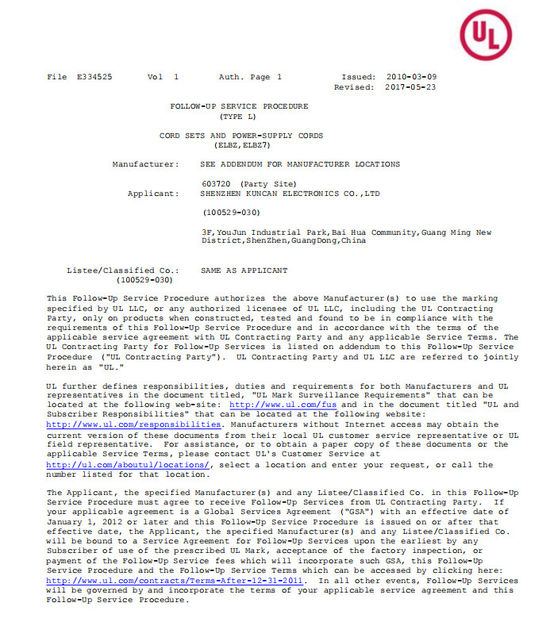
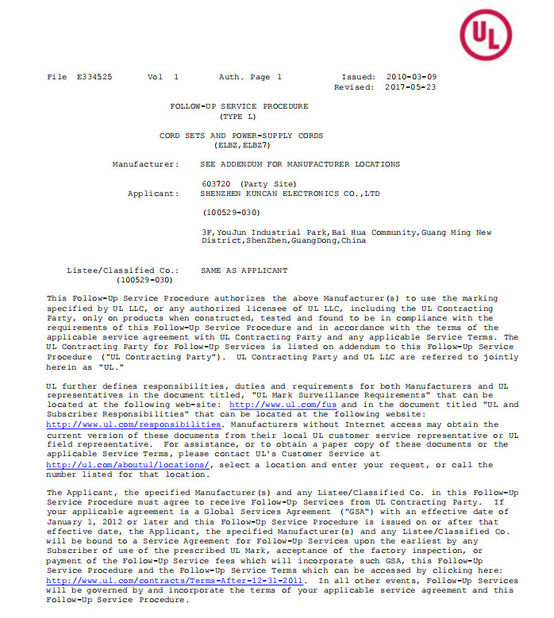
- Lieferantenqualifizierung: Wählen Sie einen professionellen Hersteller von Netzkabeln mit umfassenden Zertifizierungen für Ihre Zielmärkte, wie z. B. UL, VDE, SAA, BS. Dies ist nicht nur eine Voraussetzung für konforme Exporte, sondern auch ein Indikator für die technische Kompetenz und die Zuverlässigkeit des Qualitätssystems des Lieferanten.
- Definition technischer Spezifikationen: Geben Sie diese Kernparameter klar in RFQs oder Bestellungen an:
- Kabelabschnitt: Länge (in Metern/Fuß), Leiterquerschnitt (z. B. 16AWG), Manteltyp (z. B. SJT, H05VV-F), Nennwert (z. B. 300V 105°C).
- Steckerabschnitt: Genaue Modelle für beide Enden (z. B. „IEC 60320 C13 Stecker auf NEMA 5-15P Stecker“).
- Zertifizierung & Kennzeichnung: Verlangen Sie eine klare, dauerhafte Aufdruckung auf dem Kabelmantel mit Zertifizierungsinformationen (z. B. UL File E123456, VDE, Querschnitt, 105°C).
- Muster-Validierungsprozess: Fordern Sie für erstmalige Partnerschaften oder Großprojekte immer kundenspezifische Muster vom Lieferanten an. Verwenden Sie diese, um die Längenpräzision, die Steckkraft, die Kompatibilität mit Geräteanschlüssen und die allgemeine Verarbeitungsqualität zu überprüfen.
- Beschriftung & Asset Management: Erwägen Sie, den Lieferanten zu bitten, Etiketten an beiden Enden der kundenspezifischen Kabel anzubringen oder einzugießen (z. B. „Server-A, 0,8 m, 16AWG“). Dies erleichtert zukünftige Wartungsarbeiten, Fehlerbehebungen und die Inventur von Anlagen.
Fazit: Von der reaktiven Bereinigung zur proaktiven Planung
Die Investition in Netzkabel mit individueller Länge bringt einen Ertrag, der die inkrementellen Kosten der Kabel selbst bei weitem übersteigt. Sie stellt eine Verlagerung der IT-Infrastrukturmanagement-Philosophie dar – von der reaktiven Bereinigung von Unordnung zur proaktiven Planung zur Prävention. Durch die Implementierung präzise angepasster Kabellängen können Organisationen:
- Zuverlässigkeit verbessern: Das Wärmemanagement verbessern und Risiken von Ausfällen aufgrund von Überhitzung oder schlechten Verbindungen reduzieren.
- TCO (Gesamtbetriebskosten) optimieren: Potenziell die Kühlenergiekosten senken, die Wartungszeit reduzieren und die Lebensdauer der Geräte verlängern.
- Professionalität des Projekts: Eine saubere, organisierte und professionelle Geräteumgebung präsentieren.
In einer zunehmend wettbewerbsintensiven Geschäftswelt kann die Optimierung jedes operativen Details zu einem nachhaltigen Wettbewerbsvorteil führen. Eine maßgeschneiderte Netzkabellösung ist genau eine solche strategische Wahl – eine bescheidene Anfangsinvestition, die langfristig Dividenden in Bezug auf Betriebseffizienz und Stabilität zahlt.

 Ihre Nachricht muss zwischen 20 und 3.000 Zeichen enthalten!
 German